How to Combine Scikit-learn, CatBoost, and SHAP for Explainable Tree Models
Machine learning workflows often involve a delicate balance: you want models that perform exceptionally well, but you also need to understand and explain their predictions.

Machine learning workflows often involve a delicate balance: you want models that perform exceptionally well, but you also need to understand and explain their predictions.

Feature engineering is a key process in most data analysis workflows, especially when constructing machine learning models.

Ever wondered why your neural network seems to get stuck during training, or why it starts strong but fails to reach its full potential? The culprit might be your learning rate – arguably one of the most important hyperparameters in machine learning.

This post is divided into three parts; they are: • Understanding Word Embeddings • Using Pretrained Word Embeddings • Training Word2Vec with Gensim • Training Word2Vec with PyTorch • Embeddings in Transformer Models Word embeddings represent words as dense vectors in a continuous space, where semantically similar words are positioned close to each other.
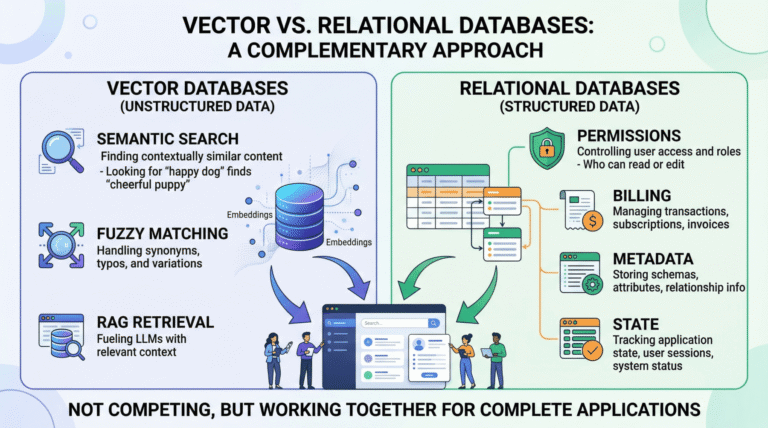
If you look at the architecture diagram of almost any AI startup today, you will see a large language model (LLM) connected to a vector store.
Machine learning models have become increasingly sophisticated, but this complexity often comes at the cost of interpretability.
It would be difficult to argue that word embeddings — dense vector representations of words — have not dramatically revolutionized the field of natural language processing (NLP) by quantitatively capturing semantic relationships between words.