How to Combine Scikit-learn, CatBoost, and SHAP for Explainable Tree Models
Machine learning workflows often involve a delicate balance: you want models that perform exceptionally well, but you also need to understand and explain their predictions.

Machine learning workflows often involve a delicate balance: you want models that perform exceptionally well, but you also need to understand and explain their predictions.
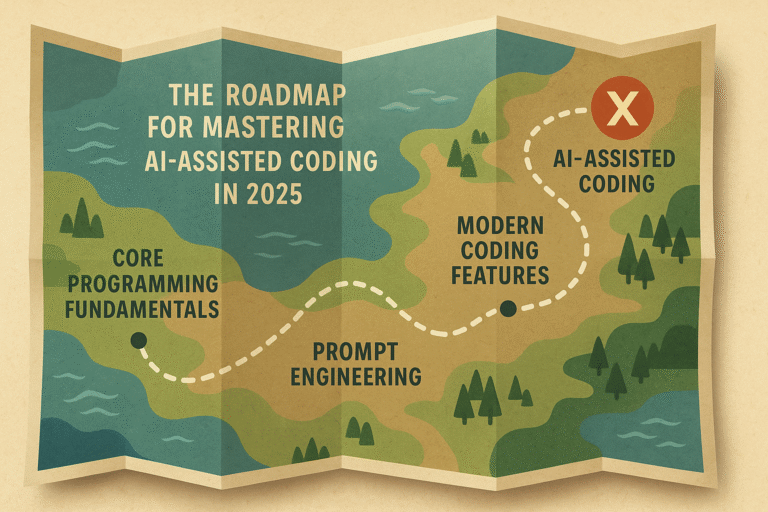
AI-assisted coding was something virtually nobody could even imagine a few years back, but to some extent, it has now become part of many developers’ workflows — be it for generating specific code snippets, debugging existing code, or even orchestrating tasks.

This post is in two parts; they are: • Understanding the Encoder-Decoder Architecture • Evaluating the Result of Summarization using ROUGE DistilBart is a “distilled” version of the BART model, a powerful sequence-to-sequence model for natural language generation, translation, and comprehension.
Feature engineering is one of the most important steps when it comes to building effective machine learning models, and this is no less important when dealing with time-series data.


Llama 3 is a capable generalist, but that’s exactly the problem when you need an agent that reliably outputs structured JSON for a specific API.
Extreme gradient boosting ( XGBoost ) is one of the most prominent machine learning techniques used not only for experimentation and analysis but also in deployed predictive solutions in industry.