The Model Selection Showdown: 6 Considerations for Choosing the Best Model
Selecting the right model is one of the most critical decisions in any machine learning project.


Selecting the right model is one of the most critical decisions in any machine learning project.

Imbalanced datasets, where a majority of the data samples belong to one class and the remaining minority belong to others, are not that rare.

Debugging machine learning models entails inspecting, discovering, and fixing possible errors in the internal mechanisms of these models.

Graph neural networks (GNNs) can be pictured as a special class of neural network models where data are structured as graphs — both training data used to train the model and real-world data used for inference — rather than fixed-size vectors or grids like image, sequences, or instances of tabular data.
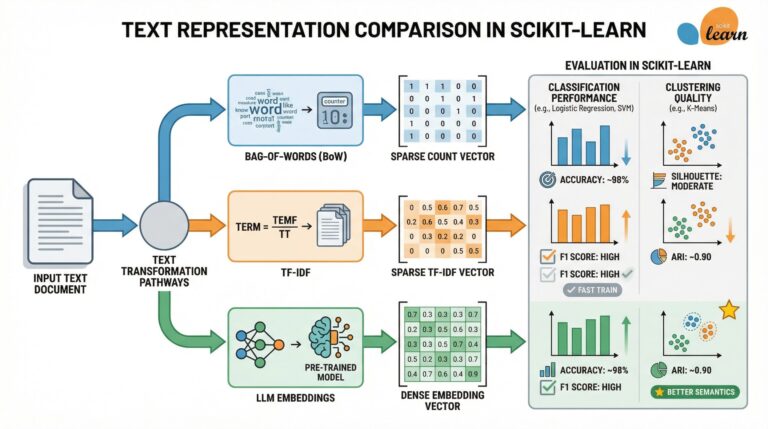
Machine learning models built with frameworks like scikit-learn can accommodate unstructured data like text, as long as this raw text is converted into a numerical representation that is understandable by algorithms, models, and machines in a broader sense.

Data preparation is one of the most time-consuming parts of any data science or analytics project, but it doesn’t have to be.

When building machine learning models, most developers focus on model architectures and hyperparameter tuning.