3 Easy Ways to Fine-Tune Language Models
Language models have quickly become cornerstones of many business applications in recent years.


Language models have quickly become cornerstones of many business applications in recent years.
Machine learning workflows often involve a delicate balance: you want models that perform exceptionally well, but you also need to understand and explain their predictions.

This article is divided into four parts; they are: • Preparing Documents • Creating Sentence Pairs from Document • Masking Tokens • Saving the Training Data for Reuse Unlike decoder-only models, BERT’s pretraining is more complex.
The foundational instructions that govern the operation and user/model interaction of language models (also known as system prompts) are able to offer insights into how we — as users, AI practitioners, and developers — can optimize our interactions, approach future model advancements, and develop useful language model-driven applications.

Data merging is the process of combining data from different sources into a unified dataset.

Most browser AI tutorials cover text because it is a natural starting point, but the applications people actually want to build are rarely text-only.
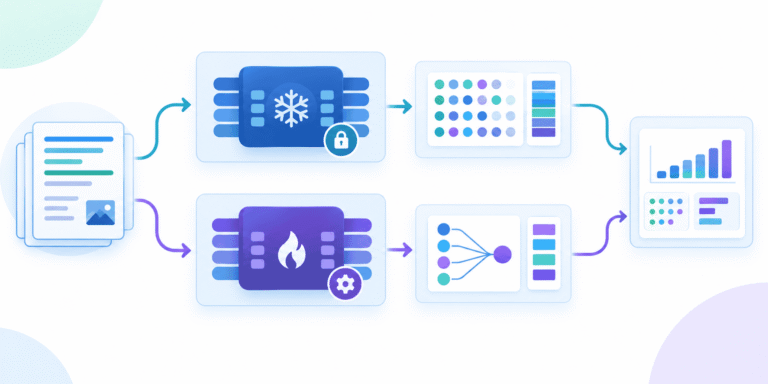
In this article, you will learn how to compare two strategies for adapting a large language model to a specific domain: fine-tuning with LoRA versus…