10 Useful NumPy One-Liners for Time Series Analysis
Working with time series data often means wrestling with the same patterns over and over: calculating moving averages, detecting spikes, creating features for forecasting models.

Working with time series data often means wrestling with the same patterns over and over: calculating moving averages, detecting spikes, creating features for forecasting models.
Large language models (LLMs) are not only good at understanding and generating text; they can also turn raw text into numerical representations called embeddings.

Developing machine learning systems entails a well-established lifecycle, consisting of a series of stages from data preparation and preprocessing to modeling, validation, deployment to production, and continuous maintenance.

As a machine learning engineer, you probably enjoy working on interesting tasks like experimenting with model architectures, fine-tuning hyperparameters, and analyzing results.

This post is in six parts; they are: • The Complexity of NER Systems • The Evolution of NER Technology • BERT’s Revolutionary Approach to NER • Using DistilBERT with Hugging Face’s Pipeline • Using DistilBERT Explicitly with AutoModelForTokenClassification • Best Practices for NER Implementation The challenge of Named Entity Recognition extends far beyond simple…
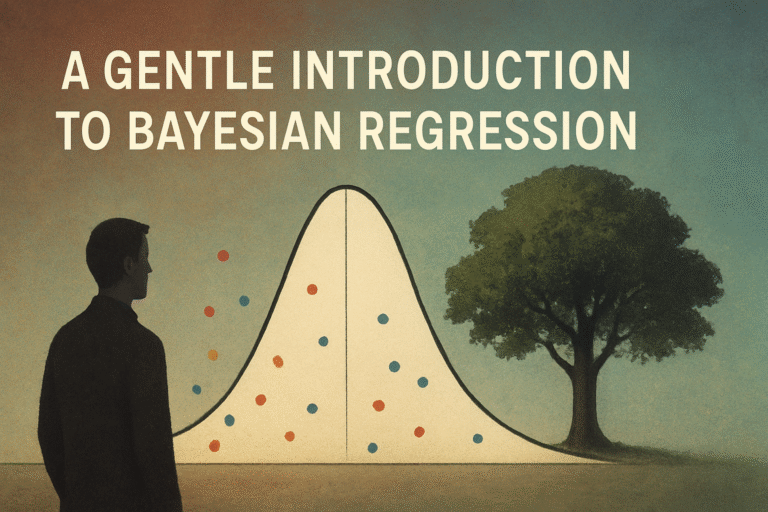
In this article, you will learn: • The fundamental difference between traditional regression, which uses single fixed values for its parameters, and Bayesian regression, which models them as probability distributions.

Combining the power of